
Christian Religious Background of Olive Wood Nativity Scenes: Meaning & Symbolism
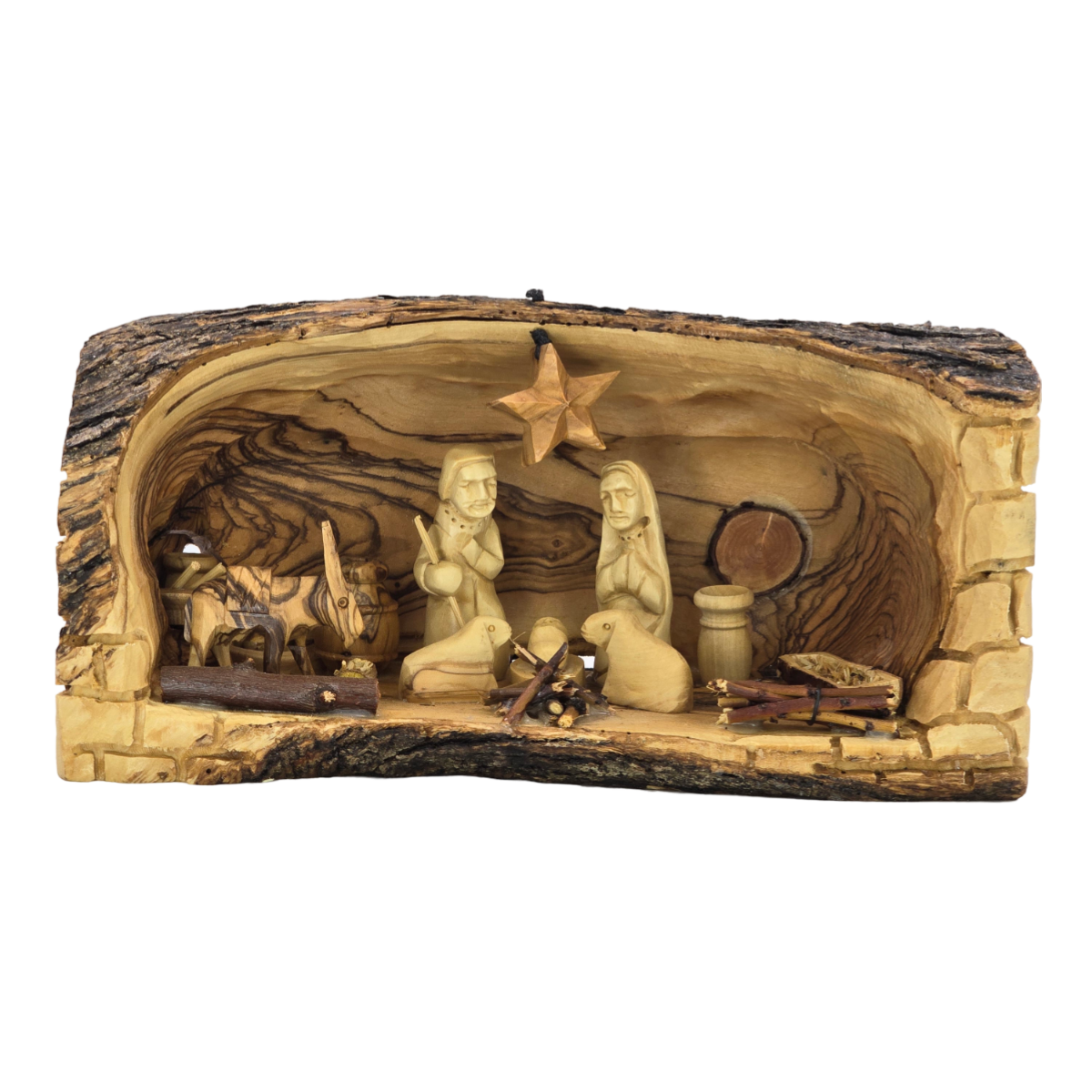
The Christian religious background of olive wood nativity scenes is deeply rooted in faith, tradition, and the Holy Land. Moreover, Bethlehem holds special significance as the birthplace of Jesus Christ, which makes the nativity scene a powerful reminder of this sacred event. In addition, olive wood connects the artwork directly to the region and reflects the lasting message of Christ’s teachings.
Historical Significance of Bethlehem
Bethlehem is widely recognized as the birthplace of Jesus Christ, and therefore it stands at the heart of Christian tradition. The nativity scene visually represents this event and helps believers remember the humility of Christ’s birth.
Furthermore, olive wood from this region strengthens the connection to the Holy Land. As a result, each nativity piece carries both historical meaning and spiritual depth, linking faith with place in a tangible way.
Biblical Symbolism of the Olive Tree
The olive tree holds strong symbolic meaning in Christianity, especially as a sign of peace and reconciliation. This meaning originates from biblical narratives such as Noah’s Ark. For example, in Genesis 8:11, the dove returns with an olive branch, which signals the end of judgment and the restoration of peace.
Moreover, olive wood used in nativity scenes continues this message. It represents divine hope, renewal, and the peaceful nature of Christ’s mission.
Artistic Tradition of Olive Wood Craftsmanship
Artisans in the Holy Land create olive wood nativity scenes using traditional techniques that have been passed down through generations. In addition, they carefully hand-carve each figure, preserving cultural heritage and spiritual expression.
Each artisan shapes every piece with care and devotion. Therefore, no two nativity scenes are identical, and each one reflects both artistic skill and personal faith.
The Nativity Scene in Christian Tradition
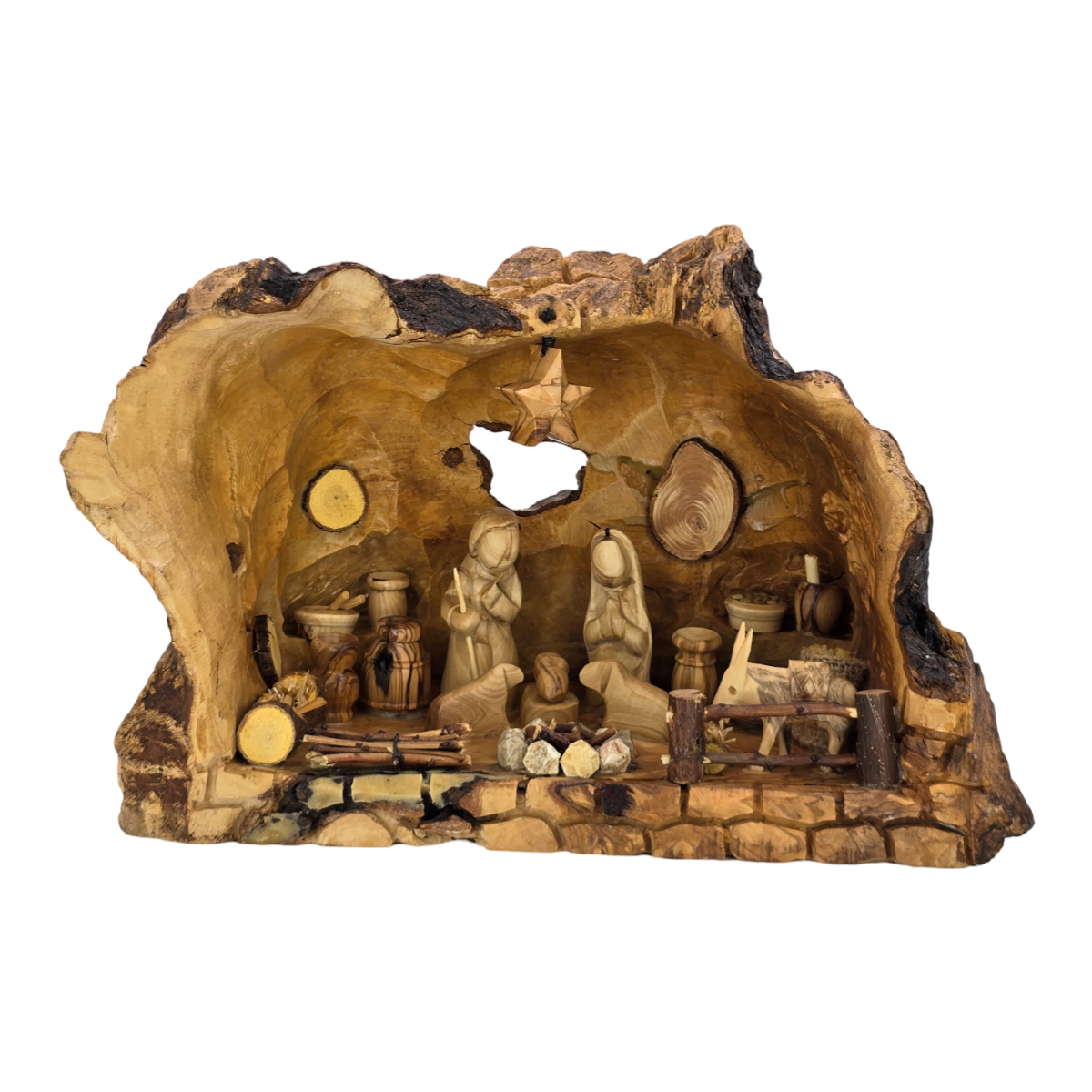
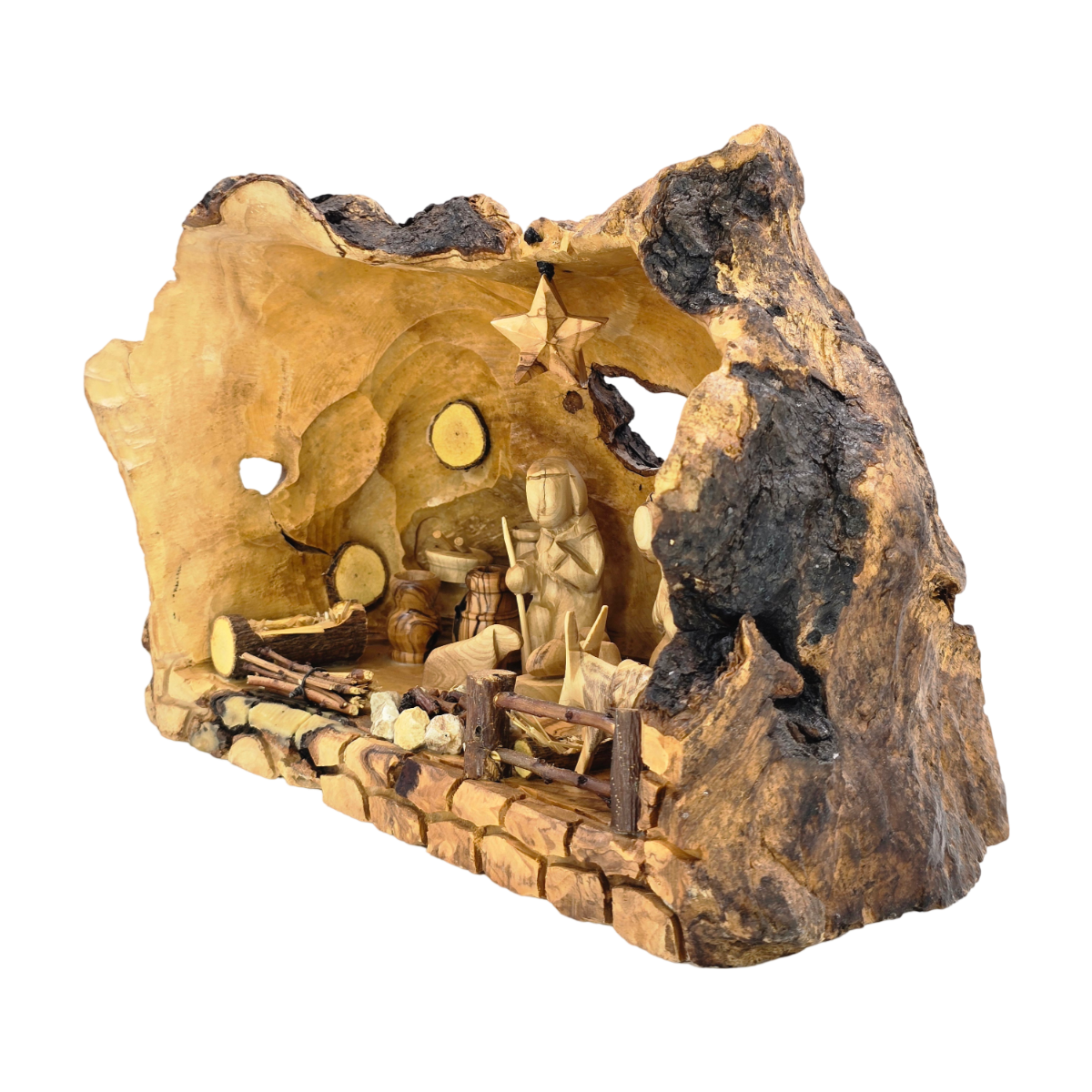
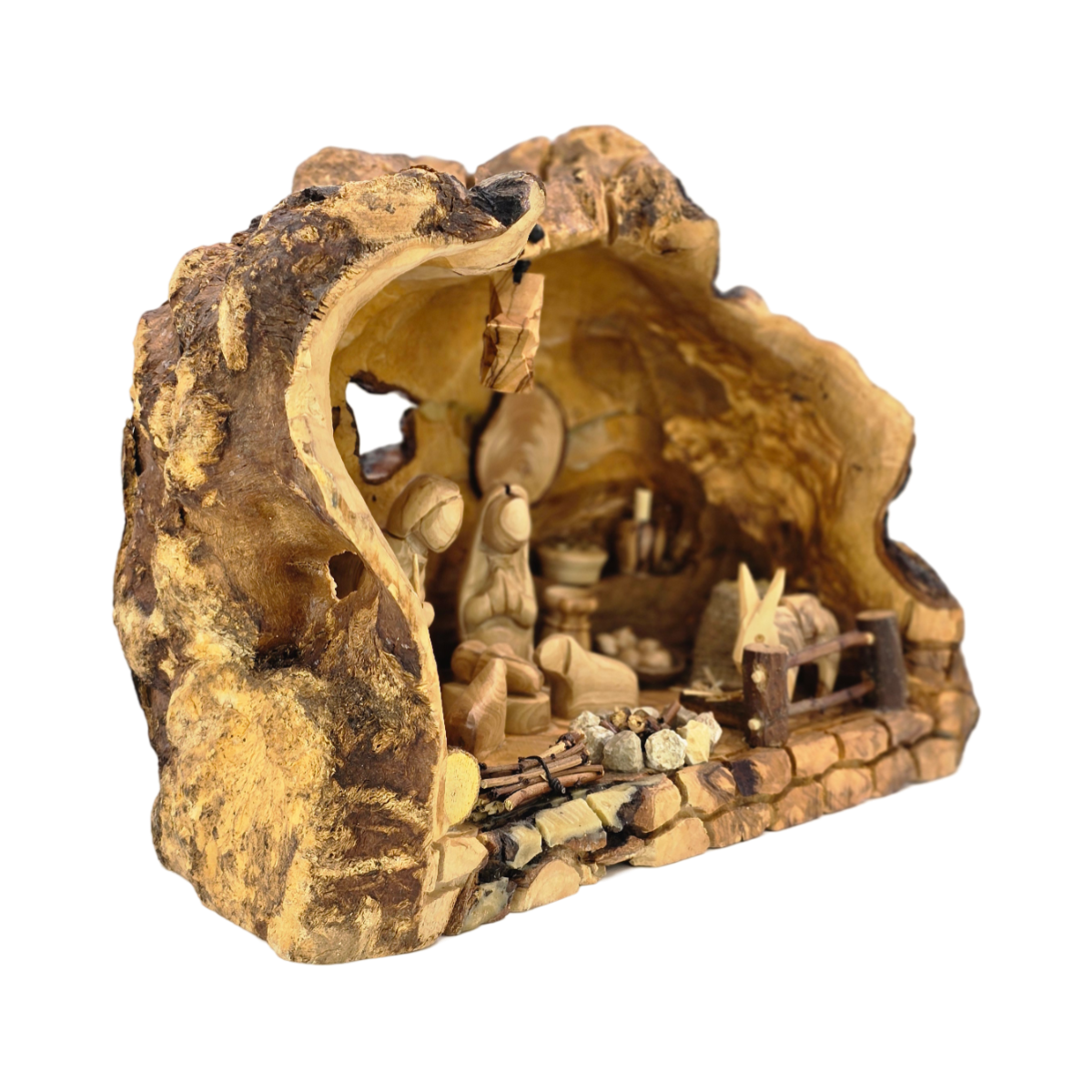
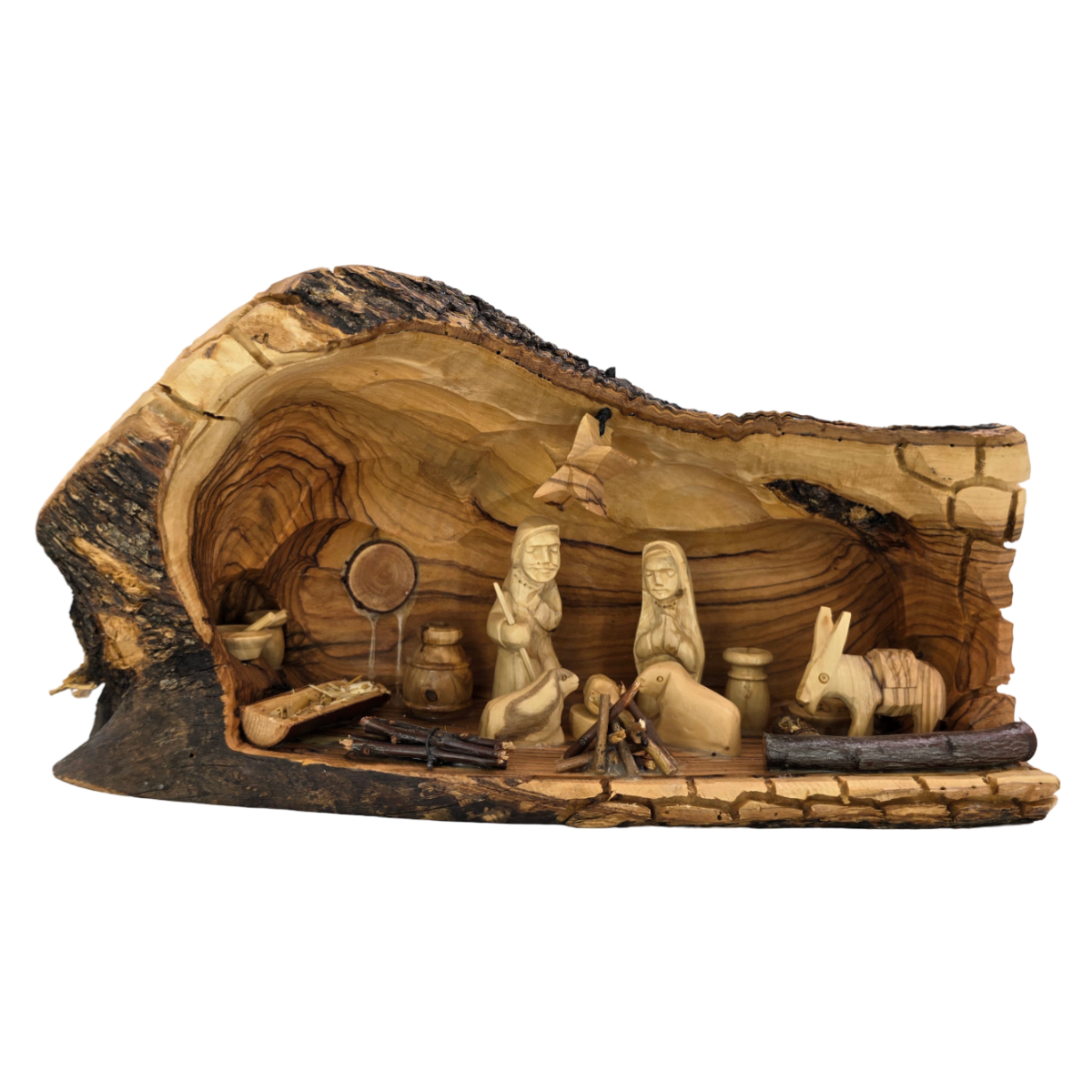
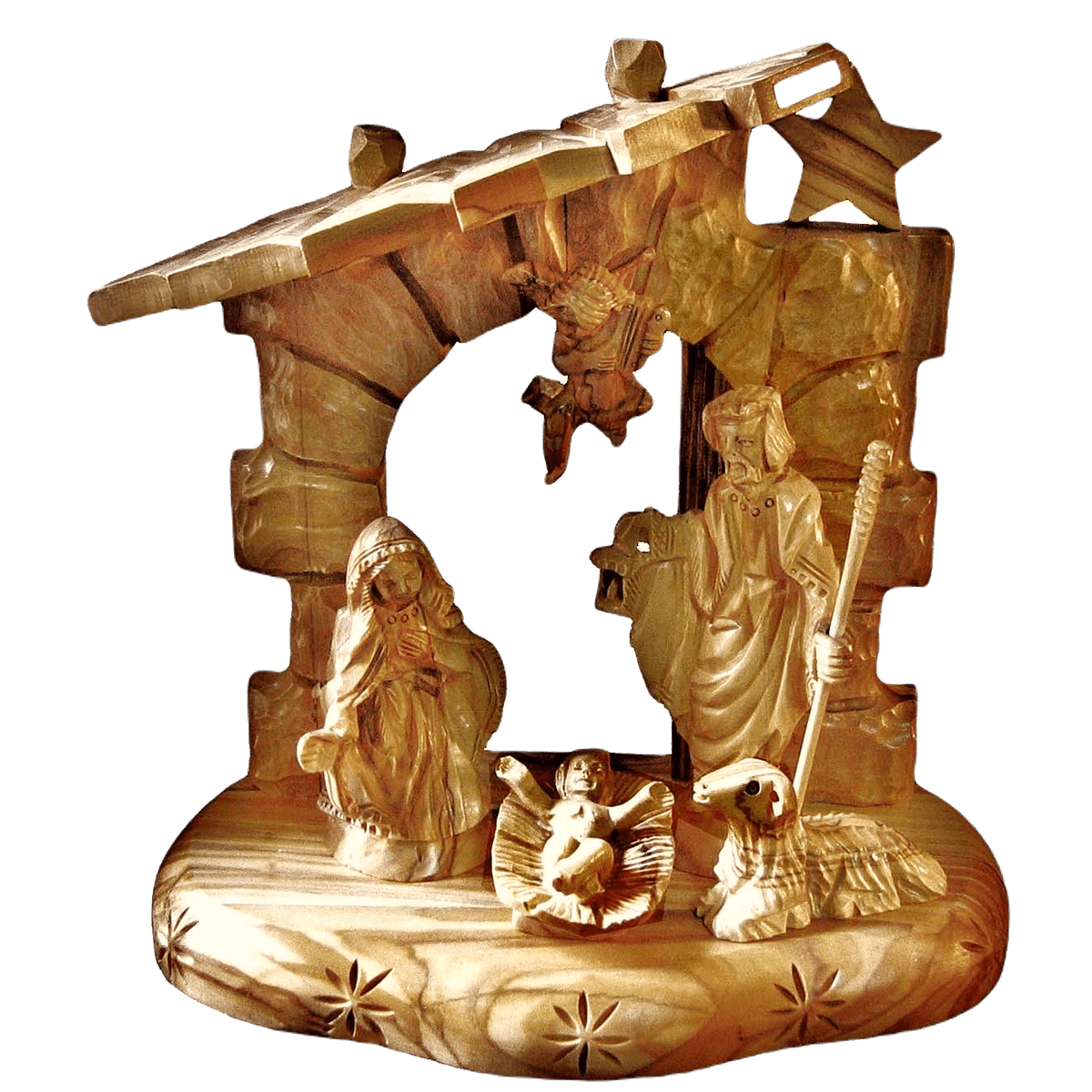
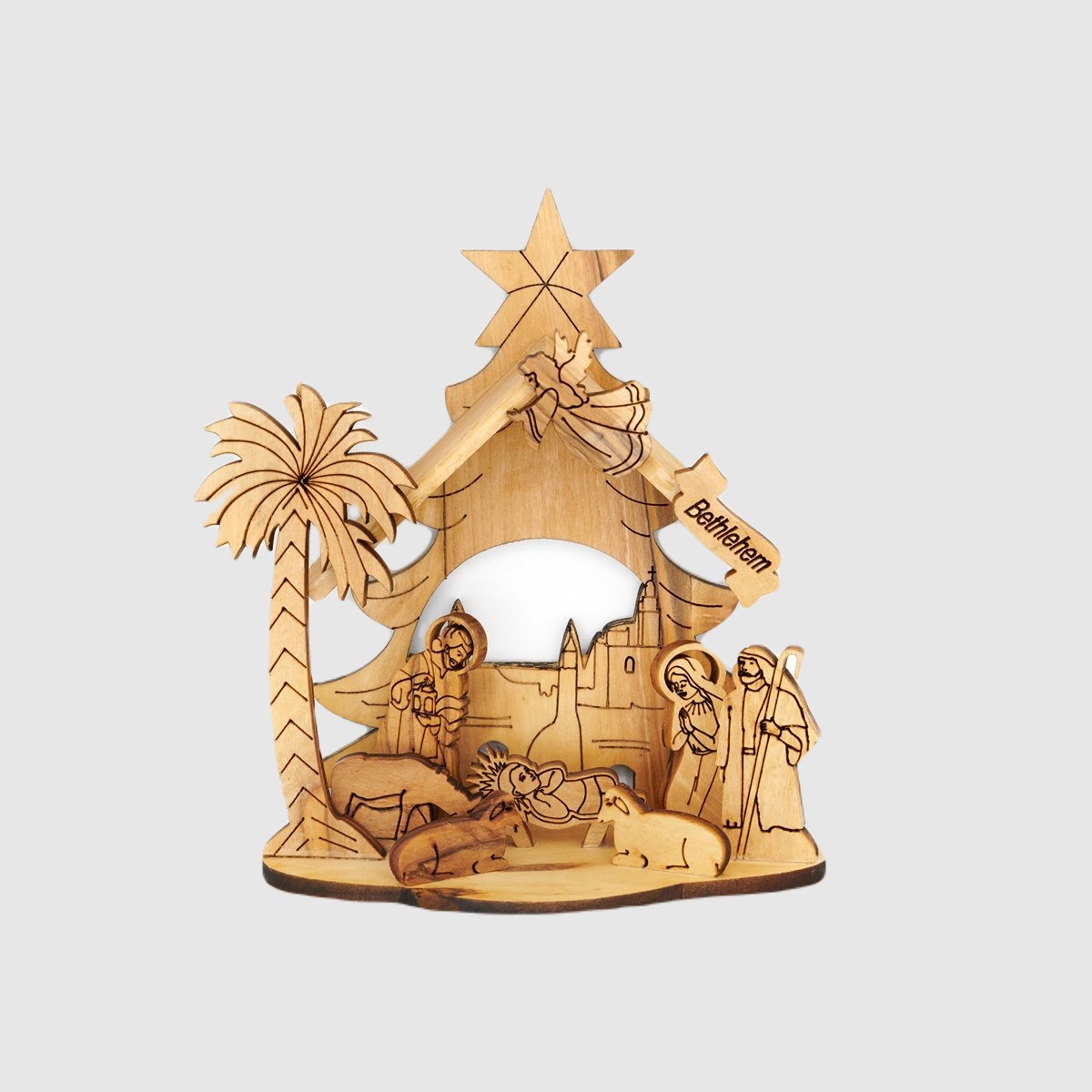
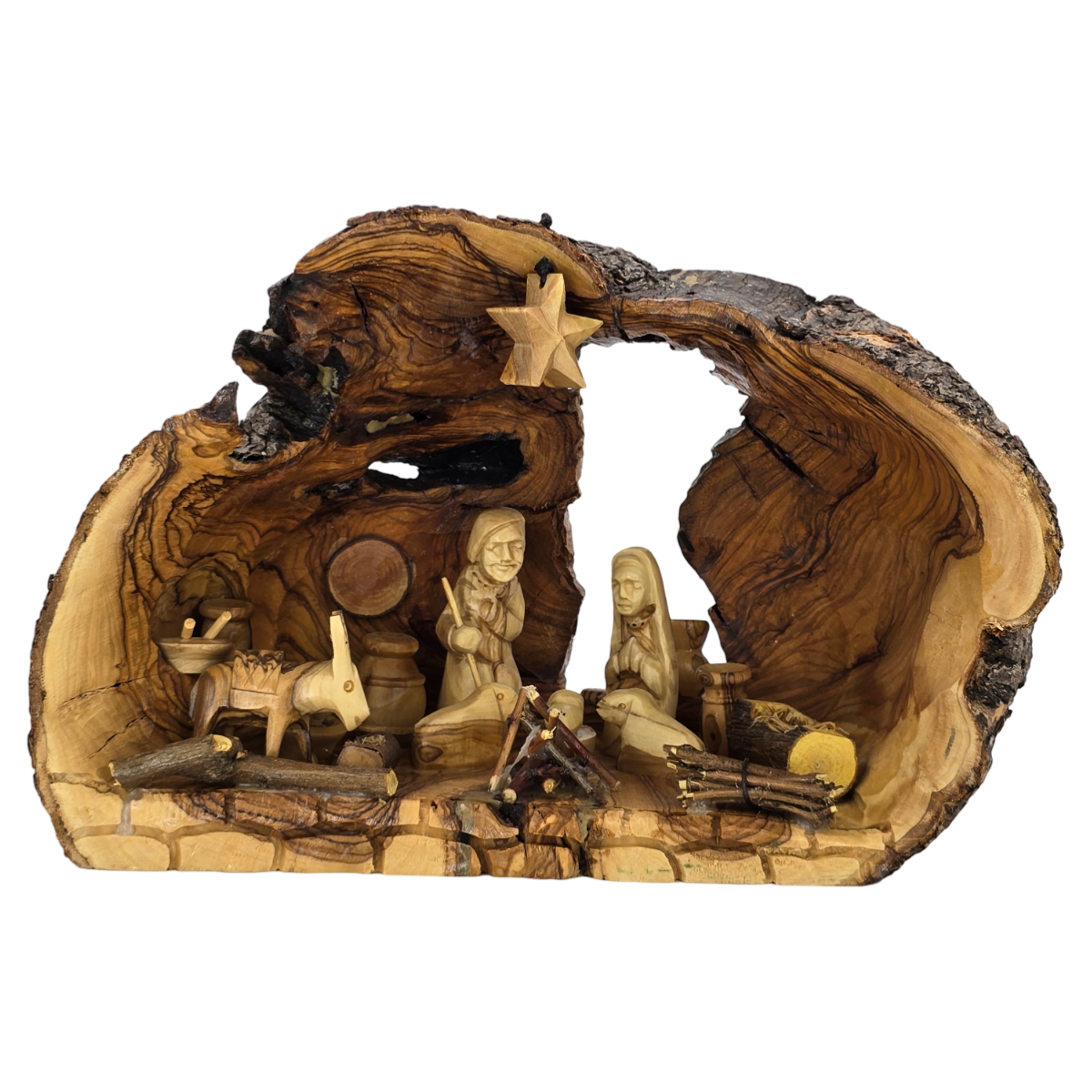
The nativity scene is a visual representation of the birth of Jesus Christ. It typically includes the Holy Family—Mary, Joseph, and Baby Jesus—along with shepherds, wise men, and sometimes animals.
Key elements of a traditional nativity scene include:
- The Holy Family at the center of the manger
- Shepherds representing humility and devotion
- Wise men symbolizing guidance and wisdom
- Animals reflecting simplicity and creation
As a result, the nativity scene helps believers reflect on humility, salvation, and the meaning of Christ’s early life.
Faith, Reflection, and Spiritual Meaning
Olive wood nativity scenes serve as a focus for Christian reflection, especially during Advent and Christmas. In particular, they invite worshippers to meditate on the Incarnation, the belief that Jesus became human and lived among humanity.
Furthermore, these scenes encourage prayer, reflection, and a deeper understanding of faith. As a result, they become more than decorative objects—they become spiritual reminders of God’s presence and love.
Overall, olive wood nativity scenes represent a deep connection between faith, history, and craftsmanship. Moreover, they unite the story of Jesus’ birth, the symbolism of the olive tree, and the artistic heritage of the Holy Land.
These nativity scenes offer both spiritual meaning and cultural value, reminding believers of peace, humility, and the enduring message of Christianity.

Reviews
There are no reviews yet.